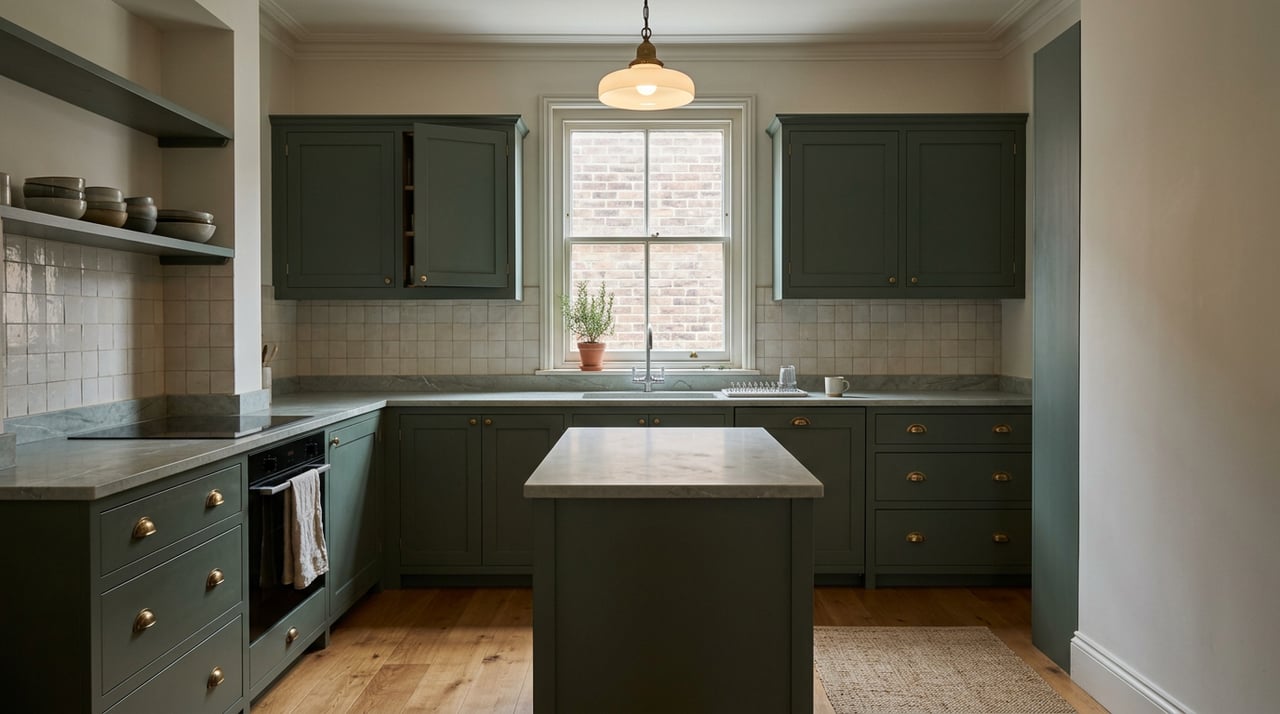
During the week of July 27 to August 2, 2026, a townhouse at 96 Franklin Street in Greenpoint that last sold for $2.4 million in 2016 went back into contract after a full renovation into a five-bedroom, three-and-a-half-bath single-family home with a garage, an elevator, and a 900-square-foot roof deck fitted with a cedar hot tub and outdoor kitchen. Asking $6 million, it was the top deal among 16 contracts signed that week on Brooklyn homes priced at $2 million and above. Homes entering contract during that stretch carried a median ask of $2.8 million, spent an average of 69 days on the market, and averaged $1,504 a square foot.
That gap, roughly $3.6 million over ten years before a single dollar of construction cost is subtracted, is the number every buyer eyeing an unrenovated Brooklyn brownstone has in the back of their mind. It's also the number that makes the math look easier than it is. The Greenpoint contract is real, and the potential upside is substantial. But treating it as a template misses what's actually happening across Brooklyn's row-house neighborhoods right now: renovated and original-condition brownstones aren't one market with a price gap between them anymore. They're becoming two markets, with two different sets of buyers, and the "discount" on the unrenovated side is compensation for risk and time, not a shortcut to the Greenpoint outcome.
The Same Week, Two Very Different Listings
You don't need a decade of appreciation to see the split. It shows up inside a single week's worth of listings.
| Listing | Neighborhood | Asking Price | Condition |
|---|---|---|---|
| 601 Madison Street | Bed-Stuy | $2.8 million | Recently renovated, marble mantels, plasterwork, central air, rooftop deck |
| 300 Milford Street | East New York | $595,000 | Original wood floors and a stained-glass skylight |
| 356 Clinton Avenue | Clinton Hill | $9.85 million | Fully renovated, marketed in coverage as a "Clinton Avenue Palazzo" |
Those three are all pulled from this week's Brownstoner listings roundup. A few months earlier, in an April 2026 edition of the same feature, a Park Slope brownstone on 8th Street asked $3.995 million while still showing its original moldings, mantels, and a plaster medallion untouched. Same city, same broad category of housing stock, and the prices span more than fifteen times over depending almost entirely on whether the work has already been done.
What the Discount Is Actually Pricing In
A typical Brooklyn row house runs somewhere between 2,300 and 3,300 square feet, based on recent townhouse listings in Clinton Hill and Bed-Stuy. Current 2026 renovation guides put a cosmetic refresh at $150 a square foot and a full high-end gut north of $700. Run that range across a house of that size and you get a spread of roughly $345,000 to $2.3 million in construction costs alone, before an architect's fee, before a general contractor's overhead, and before the $3,000 to $7,500 a typical project pays an expeditor just to move permits through the Department of Buildings.
Rewiring by itself, bringing a four-story townhouse's electrical up to current code, runs $20,000 to $45,000. And the clock matters as much as the budget: a full gut renovation of a Brooklyn townhouse takes 10 to 14 months once you count design, any required board or landmarks approvals, and DOB permitting. Plenty of Brooklyn's classic row houses sit inside historic districts, which adds its own layer of review before a shovel goes into the ground.
None of that shows up in the sticker price of an unrenovated listing. It shows up afterward, in the form of a year or more without a finished home, a construction loan or cash reserve to carry it, and a final number that regularly lands well past whatever the original asking-price gap suggested.
The Market Has Already Made Up Its Mind
This is why turnkey and original-condition brownstones are starting to behave like separate products rather than points on the same continuum. Leslie Garfield's Q1 2026 New York Townhouse Report described Brooklyn's market as one defined by scarcity and selectivity, where turnkey homes and prime locations continue to outperform while value-add properties draw a distinct pool of buyers chasing long-term upside rather than a quick move-in.
The days-on-market data backs that up. Across Brooklyn in spring 2026, single-family homes under $1 million in southern neighborhoods like Bay Ridge and Marine Park moved in 18 to 28 days. Mid-tier condos between $900,000 and $1.4 million averaged 60 to 75 days. Co-ops above $700,000 stretched past 90 days, with several premium buildings sitting on the market longer than 120 days. Co-ops overall slipped 1.3 percent year over year through April 2026, a decline that reflects buyer caution about board approvals, post-purchase liquidity requirements, and rising flip-tax sensitivities as much as it reflects condition. Brooklyn's brownstone belt, spanning Park Slope, Cobble Hill, Brooklyn Heights, Boerum Hill, and Carroll Gardens, traded between $1.4 million and $3 million that same spring, with restored single-family homes clearing $4 million on the tightest blocks. The turnkey end of the market isn't just holding value. It's the segment still moving fastest.
Where the Math Still Works in Your Favor
None of this means the renovation play is dead. It means it works for a narrower set of buyers than the headline gap suggests.
The clearest lane is co-ops that need real work, sometimes called TLC properties. These have been sitting longer than comparable renovated units, and buyers willing to take one on can end up paying meaningfully less than an equivalent condo, provided they can clear the board process and carry the renovation timeline. The second lane is geographic rather than condition-based: buyers priced out of Park Slope have been finding similar walkability and transit access in neighborhoods like Kensington, Ditmas Park, and Greenwood Heights at 15 to 25 percent lower price points, a shift that first became visible earlier this year and has continued as the borough-wide median settled at $850,000 in April 2026, up 4.2 percent from $815,500 a year earlier.
Put together, the borough's actual opportunities look less like "buy anything unrenovated and flip it" and more like:
- A co-op you're willing to fight the board for, in exchange for a real price break on the purchase itself
- A bridge neighborhood adjacent to a premium one, where the discount comes from location rather than condition, with no renovation risk attached
- A full renovation project only if you have both the cash to absorb a $345,000 to $2.3 million range and the patience for a 10-to-14-month timeline that can run longer
Two Things Buyers Ask Before They Bid
Is it cheaper to buy unrenovated and do the work yourself? Sometimes, but the Greenpoint outcome is the exception that gets remembered, not the rule. The math only works if the purchase discount exceeds the realistic renovation cost for the scope of work the house actually needs, and if you've budgeted for a year or more of carrying costs on top of construction. Current guides put full gut renovations at 10 to 14 months.
Why are co-ops softening while brownstones hold value? Co-op pricing slipped 1.3 percent year over year through April 2026, driven by board approval friction, share-loan limits, and flip-tax exposure rather than a change in underlying demand. Brownstones and townhouses, particularly renovated ones in prime blocks, don't carry that same board layer, which is part of why they've kept transacting quickly while co-op inventory ages on the market.
If you're weighing a renovated brownstone against a project house, or trying to figure out which Brooklyn block actually gets you the trade-off you want, that's exactly the kind of read a local walk-through settles faster than a spreadsheet. Jeffrey Goodman has spent years pricing this exact gap block by block across brownstone Brooklyn. Let's Connect.
This article is general information, not legal, tax or financial advice. Consult a qualified professional about your situation.